
Shockwave Therapy Explained
Shockwave Therapy Explained
When stubborn muscle or tendon pain keeps getting in the way of your everyday life, you want solutions that make a difference. That’s where shockwave therapy comes in. The name might sound intense, but the treatment itself is safe, non‑invasive, and often remarkably effective: especially for long‑lasting or hard‑to-treat conditions.
Let’s take a closer look at what shockwave therapy really is and why it has become such a trusted tool in modern physiotherapy.
What Is Shockwave Therapy?
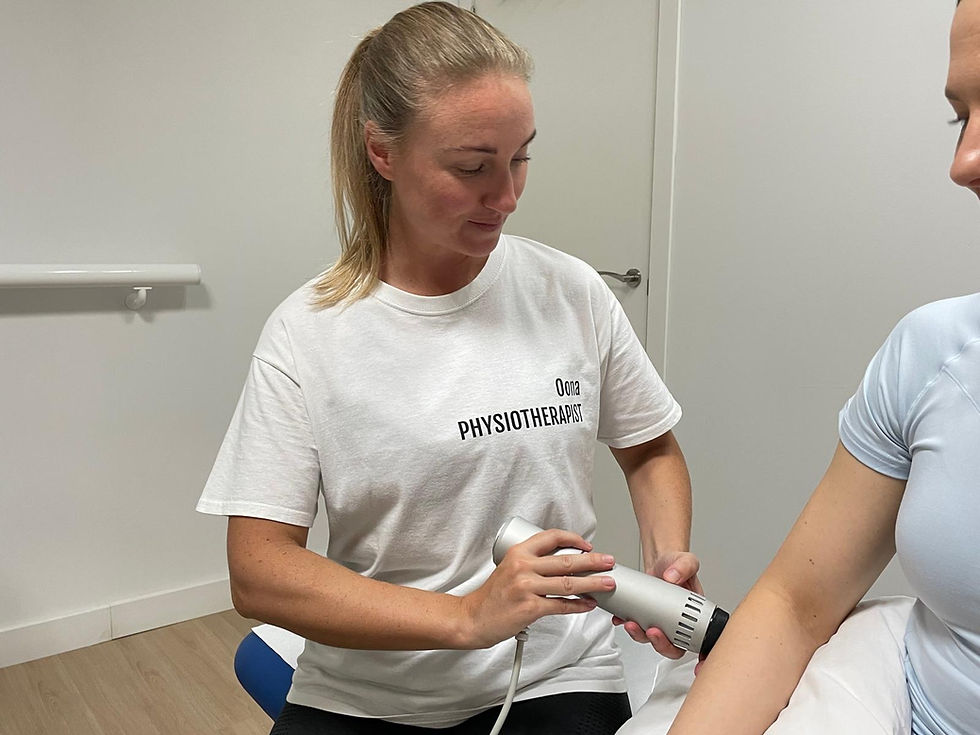
Shockwave therapy uses low‑energy acoustic waves, powerful, targeted sound waves to stimulate healing in injured or irritated tissues. A trained physiotherapist applies these waves directly to the problem area using a handheld device.
While ultrasound uses gentle sound waves, shockwaves are far more intense. Around 1,000 times stronger at their peak. This intensity allows them to reach deeper structures and trigger meaningful biological changes that support recovery.
How Does It Work?
Researchers are still uncovering the full picture, but we already know that shockwave therapy sets off a chain of beneficial reactions inside the body. As the acoustic waves move through the tissue, they create rapid pressure changes that help to:
· Improve local blood flow
· Increase oxygen delivery
· Activate the body’s natural repair mechanisms
· Encourage new blood vessel growth
· Support collagen production (essential for tendons and ligaments)
· Reduce pain by influencing nerve activity
Together these effects help tissues regenerate more effectively, often leading to noticeable pain relief.
A Closer Look (Without the Complicated Science)
Each shockwave is a quick burst of energy lasting only about 10 milliseconds. It has two phases:
A positive phase, which applies mechanical force to the tissue
A negative phase, which creates tiny bubbles that collapse and release a secondary wave of energy
This combination helps “wake up” tissues that have become irritated, overloaded, or slow to heal, nudging them back into a healthier recovery process.
What Conditions Can Shockwave Therapy Help With?
Shockwave therapy is widely used for persistent musculoskeletal issues, especially when symptoms haven’t improved with other treatments. It’s commonly recommended for:
· Rotator cuff pain
· Tennis elbow or golfer’s elbow
· Jumper’s knee or runner’s knee
· Achilles tendon pain
· Plantar fasciitis
· Chronic muscle tightness, such as tension in the neck
Many people start noticing improvements quickly. A typical treatment plan includes 3–6 sessions, spaced 1–2 weeks apart.
Is Shockwave Therapy Right for You?
If ongoing tendon or muscle pain is holding you back, shockwave therapy may be a powerful addition to your treatment plan. Your physiotherapist will assess your symptoms, medical history, and goals to determine whether it’s the right fit.
Healing doesn’t always happen overnight, but with the right tools and the right guidance you can move toward a more comfortable, active life again.


Comments